Built to Last: Why Kate Spade's Most Iconic Shapes Keep Showing Up No Matter What Fashion Does Next

Fashion moves fast. One season it's all about oversized hobo bags in earth tones; the next, everyone's reaching for micro bags in neon. If you've been buying bags to keep up with the cycle, you already know how exhausting — and expensive — that game gets.
But here's something worth paying attention to: certain Kate Spade silhouettes keep reappearing in stylists' lookbooks, resale market listings, and everyday street style photos regardless of what the runways are doing. The structured tote. The boxy satchel. The clean-lined geometric crossbody. These aren't just classics in the nostalgic sense — they're actively, consistently relevant. And that's not an accident.
What "Structured" Actually Means (and Why It Matters)
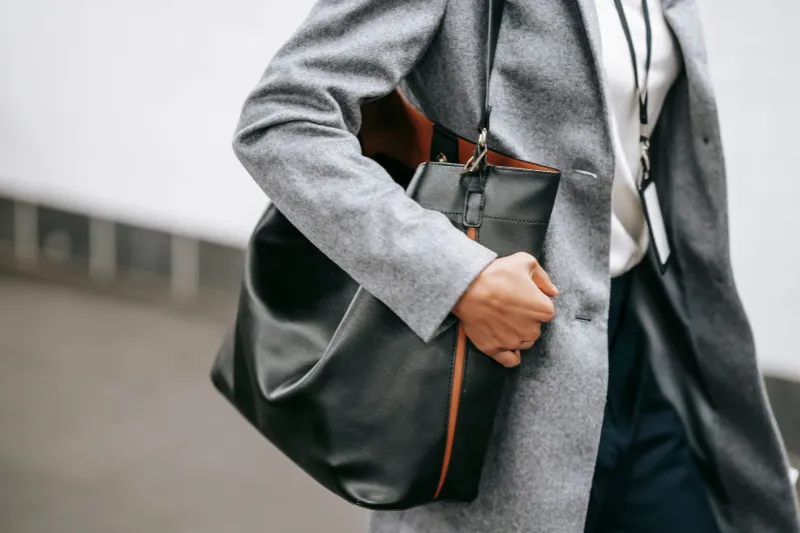
When fashion people talk about a structured bag, they're describing something specific: a piece that holds its shape without your help. No slumping, no collapsing when you set it down, no guessing what it'll look like once it's packed. The bag has architecture — internal support, defined edges, intentional geometry.
Kate Spade built its reputation on exactly this kind of design. From the brand's earliest days, the signature aesthetic leaned into clean lines and deliberate form. That original black nylon square bag from the mid-90s? Structured. Intentional. Built to look the same on day one as it did three years later.
That commitment to form has carried through to the current collection. Pick up a Madison Satchel or a Sam Icon Tote and you'll notice the same quality: the bag has a presence independent of what's inside it. It stands on its own, literally and figuratively.
The Geometry Argument: Why Shape Outlasts Color and Print
Trend forecasters will tell you that color and print are the most volatile elements in fashion. The "it" shade of one year can feel dated by the next. But shape moves on a much longer cycle.
Consider the boxy satchel. It appeared in the 1960s as a mod statement piece, faded, came back in the 1990s as a minimalist staple, dipped again, and has been a consistent presence in Kate Spade's lineup for the past decade. The silhouette itself doesn't age because it's rooted in something more fundamental than trend — it's rooted in proportion and function.
New York-based stylist Mara Okonkwo, who works with clients ranging from corporate professionals to creative directors, puts it plainly: "When I'm building a wardrobe meant to last, I always start with shape. A well-proportioned structured bag works against a power suit in 2005, a midi dress in 2015, and wide-leg trousers in 2025. The shape is the constant. Everything else is just context."
This is exactly why geometric crossbodies — think the Kate Spade Knott or the Spade Flower Jacquard styles — keep selling even outside of their launch season. The clean angles read as modern in almost any fashion context, which means they don't require a specific trend environment to feel right.
Life Stages and the Structured Bag
There's another reason these silhouettes hold up: they're genuinely versatile across the different versions of your life, not just different outfits.
In your early career years, a structured tote communicates polish without trying too hard. It fits a laptop, a notebook, and a lunch without looking overstuffed or chaotic. It signals that you have your act together, even on the days when you absolutely do not.
As life gets more complex — maybe you're traveling more, juggling more responsibilities, or simply have less patience for bags that don't cooperate — the boxy satchel earns its place. It's organized, accessible, and professional enough for a client meeting but relaxed enough for a Saturday farmers market run.
And the geometric crossbody? That one travels with you through everything. Concerts in your twenties, weekend errands in your thirties, hands-free navigation of airports and school pickup lines in whatever decade comes next. The form factor doesn't change; your life just keeps finding new reasons to reach for it.
Stylist and wardrobe consultant Devon Pierce, who works primarily with women navigating major life transitions, agrees: "I've watched clients carry the same Kate Spade structured bag from a job interview to a baby shower to a board meeting. The bag doesn't need to evolve — it just needs to be well-made enough to show up for all of it."
The Resale Signal You Shouldn't Ignore
If you want an unbiased opinion on what actually holds relevance over time, look at the secondhand market. Resale platforms don't have a stake in nostalgia — they reflect real demand from real buyers.
Structured Kate Spade silhouettes consistently command strong resale prices, particularly the Sam Icon, the Madison family, and older iterations of the boxy satchel. That's not just because they're well-made (though they are). It's because there's sustained demand for them. People are actively looking for these shapes, which means they're still relevant enough that someone is willing to pay for them years after the original purchase.
For a buyer thinking about cost-per-wear and long-term value, that's a meaningful data point. A bag that holds its resale value is a bag that held its cultural relevance — and that's not something trend-chasing pieces can usually claim.
How to Wear Them Across Fashion Eras Without Looking Stuck
The practical question is always: how do I style a bag I bought five years ago without looking like I'm living in the past?
The honest answer is that structured silhouettes are easier to restyle than almost any other bag category precisely because their form is neutral. The bag isn't making a loud statement about a specific moment in time — it's providing a clean, defined anchor for whatever you're building around it.
A few approaches that work:
Let the bag be the straightforward piece. If your outfit is doing something interesting — a bold print, an unexpected texture, an oversized silhouette — the structured bag provides a grounding counterpoint. It doesn't compete; it completes.
Update through accessories, not the bag itself. A structured Kate Spade tote from three years ago looks completely current when paired with this season's shoes or a fresh color palette. The bag doesn't need to change — the context does.
Lean into the contrast. Pairing a very structured bag with something deliberately casual (vintage denim, an oversized linen shirt) creates an intentional tension that reads as style-aware rather than dated.
The Smartest Buy You Can Make Right Now
If you're standing at the crossroads of a trend piece and a structured classic, the math isn't complicated. The trend piece will feel exciting for a season, maybe two. The structured silhouette will still be in rotation when you can't remember what made the trend piece feel urgent in the first place.
Kate Spade's structured lineup — the totes, the satchels, the geometric crossbodies — represents exactly the kind of considered investment that a fashion-conscious buyer should be making. Not because they're boring or safe, but because they're built with enough intention to outlast the moment they were made in.
That's not a small thing. In a market full of bags designed to feel exciting for exactly one season, a bag that's still showing up a decade later is telling you something. It's worth listening.